

.png)
Whole Home Water Filtration for Fremantle Properties

Updated: Aug 4
Clean water is something every household depends on, but many homeowners in Fremantle are becoming more aware of the limitations of treated mains water. While Western Australia provides safe drinking water, it can still contain chlorine, sediment, minerals, and other impurities that affect taste, smell, plumbing, and household appliances.
A Whole Home Water Filtration Fremantle system treats water as it enters your property, supplying cleaner water to every tap, shower, washing machine, and appliance. Whether you own a family home, apartment, or investment property, installing the right water filtration system can improve daily comfort while protecting your plumbing for years.
Why Fremantle Homes Benefit from Whole Home Water Filtration
Fremantle sits on Western Australia's coastline, where water quality can vary due to treatment methods, ageing infrastructure, and local distribution networks. Many residents notice:
Strong chlorine smell
Hard water minerals
Sediment after maintenance work
Dry skin after showering
White scale buildup on taps
Reduced appliance lifespan
A professionally installed water filtration system removes many of these unwanted elements before water reaches any outlet inside your home.

How a Whole Home Water Filtration System Works
Unlike under-sink filters that only treat drinking water, whole house systems filter incoming water before it flows through the home's plumbing.
Typical filtration stages include:
Sediment pre-filter
Carbon filtration
Heavy metal reduction
Chlorine removal
Optional UV sterilisation
Optional water softening
This means every tap delivers cleaner water throughout the property.
Types of Water Filtration Systems
System Type | Best For | Filters |
Carbon Filter | Chlorine, taste & odour | Entire house |
Sediment Filter | Dirt, rust & sand | Whole home |
Multi-Stage Filter | Most households | Multiple contaminants |
UV Sterilisation | Bacteria protection | Rural properties |
Water Softener + Filter | Hard water areas | Minerals + contaminants |
Choosing the Right Water Filtration System
Every property has different water quality requirements.
Consider:
Family size
Daily water usage
Existing plumbing
Water hardness
Local water reports
Future maintenance costs
Professional water testing helps identify the most suitable system rather than installing unnecessary filtration.
Whole Home Water Filtration vs Under-Sink Filters
Feature | Whole Home Filtration | Under-Sink Filter |
Drinking Water | ✓ | ✓ |
Bathrooms | ✓ | ✗ |
Laundry | ✗ | |
Hot Water | ✓ | ✗ |
Appliances | ✓ | ✗ |
Plumbing Protection | ✓ | ✗ |
For homeowners wanting complete household protection, whole home systems provide far greater value.
Eco-Friendly Water Filtration for Modern Homes
Many homeowners are replacing bottled water with permanent filtration systems.
Benefits include:
Less plastic waste
Lower long-term costs
Reduced transport emissions
Better tasting tap water
Sustainable household solution
Choosing eco-friendly water filtration supports both your home and the environment.
Professional Installation Matters
Even premium filters perform poorly if installed incorrectly.
Professional water filtration service providers ensure:
Correct pipe sizing
Proper pressure management
Leak-free installation
Easy maintenance access
Manufacturer warranty compliance
Routine servicing keeps filters performing efficiently throughout the year.
Maintenance Requirements
Most systems require:
Sediment filter replacement every 6–12 months
Carbon cartridge replacement annually
UV lamp replacement every 12 months (if installed)
Professional inspection every year
Following the manufacturer's maintenance schedule helps maintain consistent water quality.
Cost Factors
Installation costs depend on:
Property size
Water usage
Filter capacity
Plumbing complexity
Optional UV systems
Water softener integration
Although initial costs vary, many households save money over time by purchasing fewer bottled water products and reducing appliance maintenance.
Insight: Why More Western Australian Homeowners Are Installing Whole Home Systems
Across Western Australia, homeowners are increasingly choosing full-property filtration rather than point-of-use filters because they want consistent water quality from every tap, not only in the kitchen. The growing focus on healthier living, plumbing protection, appliance longevity, and reducing bottled water consumption has made whole home filtration one of the most practical long-term home upgrades.

Choosing a Reliable Water Filtration Service in Canning Vale
Although this guide focuses on Whole Home Water Filtration Fremantle, many homeowners choose experienced installers based in Canning Vale because they regularly service Fremantle and surrounding suburbs.
A reputable provider should:
Assess your property's water quality
Recommend a correctly sized system
Use certified filtration products
Offer transparent pricing
Provide scheduled maintenance
Support warranty servicing
Working with an established local installer ensures your filtration system continues performing efficiently for years.
Final Thoughts
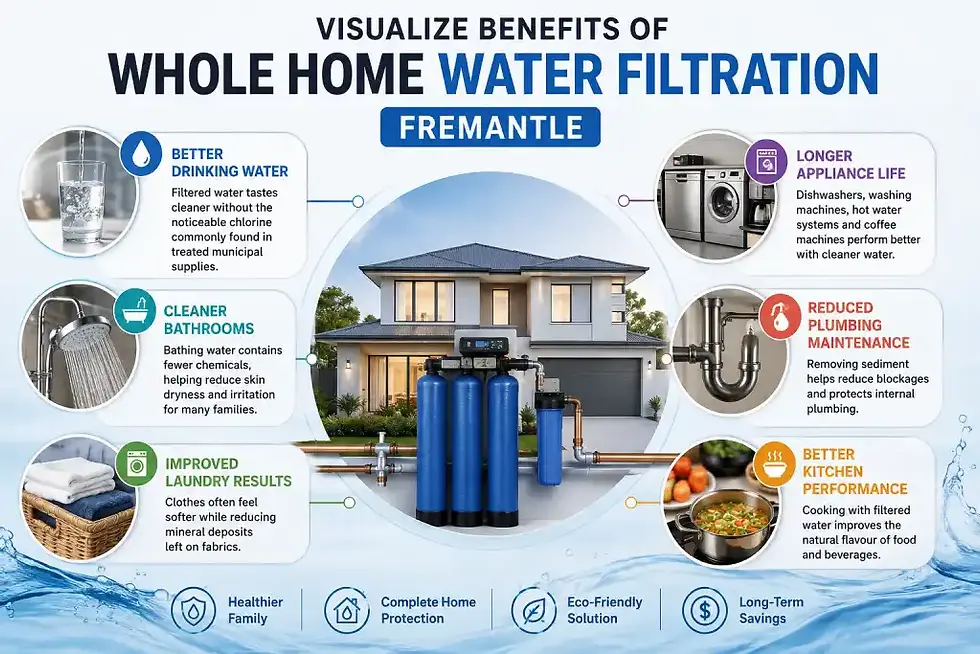
Installing Whole Home Water Filtration Fremantle is about more than improving drinking water. It protects plumbing, improves bathing water, extends appliance life, and supports a healthier household with cleaner water available at every tap. Whether you're renovating, buying a new property, or simply improving everyday living, a professionally installed whole home water filtration system is a practical investment for Fremantle properties.
FAQs
1. Is whole home water filtration worth it in Fremantle?
Yes. Many Fremantle homeowners install whole home filtration to reduce chlorine, sediment, and unpleasant tastes while protecting plumbing and household appliances. The system provides cleaner water to every tap, making it a practical long-term investment for families, homeowners, and property investors.
2. How often should a whole house water filter be replaced?
Most sediment filters require replacement every 6 to 12 months, while carbon filters are generally replaced annually. UV lamps should also be changed each year if installed. Maintenance frequency depends on household water usage, water quality, and the specific filtration system.
3. Can a whole home filtration system remove chlorine?
Yes. Most quality whole home systems use activated carbon filtration to significantly reduce chlorine, improving both the taste and smell of household water. This also helps create more comfortable bathing water and reduces chlorine exposure throughout the home.
4. What is the difference between a whole home filter and an under-sink filter?
An under-sink filter treats water at one tap, usually for drinking and cooking. A whole home filtration system filters water before it enters the property's plumbing, supplying cleaner water to bathrooms, laundry, kitchen, outdoor taps, and household appliances.
5. Can apartment owners install whole home water filtration?
Some apartment owners can install building-approved filtration systems depending on the plumbing layout and strata regulations. Consulting a professional water filtration service helps determine suitable options that comply with building requirements while improving household water quality.


