

.png)
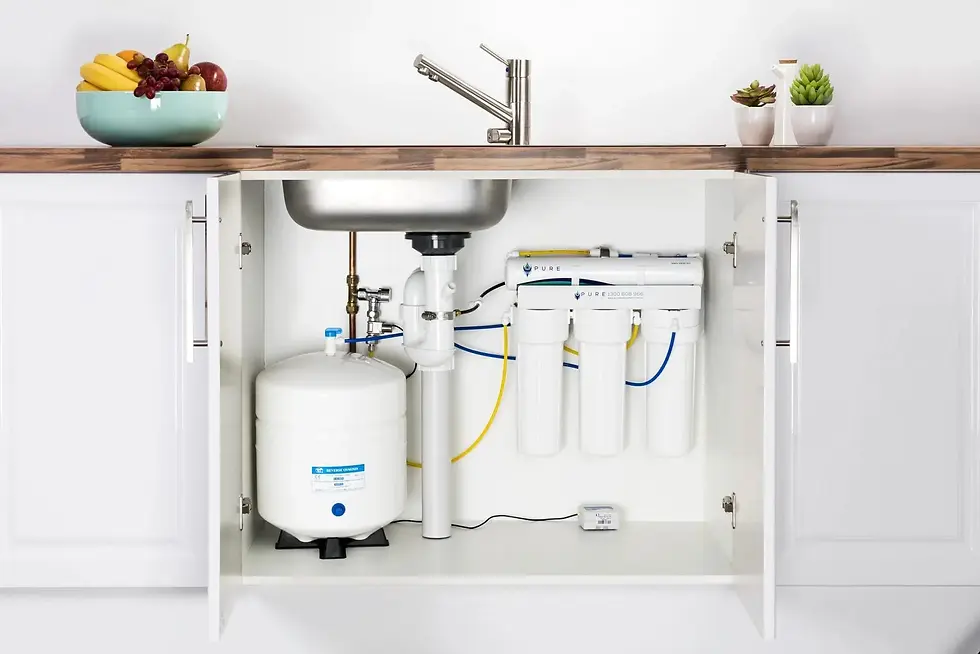
Under Sink Water Filtration in Busselton

Clean, great-tasting drinking water is an everyday priority for families, homeowners and renters across Busselton. A practical way to improve water at the kitchen tap is Under Sink Water Filtration. These systems sit inside the kitchen cabinet, keep the benchtop clear and provide filtered water for drinking, cooking and other food-related tasks.
Busselton is serviced by independent water providers rather than Water Corporation, so residents should check their own local water information when assessing water quality.
A suitable water filtration system can help address concerns such as chlorine taste, odour and sediment. The right system depends on the water source, household usage and the contaminants you actually want to reduce. Certified filtration claims are particularly important because different filters target different substances.

Why Under Sink Water Filtration Makes Sense in Busselton
An under-sink system is designed as a point-of-use solution. Instead of filtering every outlet in the property, it concentrates treatment on water used at the kitchen sink.
That makes it especially practical for:
Families that drink several litres of water each day
New homeowners looking for a discreet kitchen upgrade
Apartment owners with limited installation space
Rural and regional households with specific water-quality concerns
Homes where bottled water has become a regular expense
Kitchens where owners want filtration without a bulky benchtop appliance
Western Australian water supplies can vary by source. Water Corporation notes that groundwater-fed areas are more likely to experience harder water, caused by naturally occurring calcium and magnesium. Hardness can contribute to spots, deposits and scale, although standard filtration does not necessarily remove these minerals.
This distinction matters. A homeowner looking for better taste and chlorine reduction may need a carbon-based filter, while someone concerned about dissolved minerals may require a different treatment technology, such as reverse osmosis.
A targeted solution for everyday kitchen use
Whole-house filtration can be useful for broader water-quality concerns, but it may be unnecessary if the main priority is drinking and cooking water. Under-sink filtration treats water close to the point where it is consumed. NSF describes point-of-use systems as solutions designed for specific outlets, including under-sink filtration and reverse osmosis systems. For apartment owners, this targeted approach can also be easier to accommodate than a whole-property system.

How Under-Sink Filtration Systems Work
Most under-sink filtration systems use one or more cartridges to treat water before it reaches a dedicated filtered-water tap or compatible mixer. A basic system may combine sediment filtration with activated carbon. Sediment filtration can capture suspended particles, while activated carbon is commonly used to improve taste and reduce substances such as chlorine. More advanced systems can use additional filtration stages or reverse osmosis.
Filtration Type | Typical Purpose | Suitable For |
Sediment filter | Reduces suspended particles and sediment | Homes concerned about visible particles |
Activated carbon | Helps reduce chlorine, taste and odour | Everyday drinking and cooking |
Multi-stage filtration | Combines different filtration media | Households with several water-quality concerns |
Reverse osmosis | Reduces TDS and selected dissolved contaminants | Specific dissolved-contaminant concerns |
UV treatment | Microbiological treatment in suitable systems | Specific microbiological applications |
The exact performance depends on the cartridge and product certification. NSF recommends choosing a system based on the contaminants you want to reduce rather than assuming every filter removes everything. For example, NSF/ANSI 42 covers aesthetic reductions such as chlorine and taste or odour, while NSF/ANSI 53 relates to contaminants with health effects. Reverse osmosis systems fall under NSF/ANSI 58, which includes testing for TDS reduction and various optional contaminant-reduction claims.
Filtration is not the same as water softening
This is an important point for Busselton homeowners. Hardness is primarily associated with calcium and magnesium. Standard carbon and sediment filtration should not be presented as a substitute for a dedicated water-softening solution. Water Corporation confirms that these minerals occur naturally in many Western Australian supplies and that ordinary filtration does not remove them. If scale is the main concern, ask a water filtration professional to assess the water before selecting equipment.
Choosing the Right Water Filtration System for Your Busselton Home
The best system is not automatically the one with the most stages. It should match your water source, kitchen setup, household size and treatment goals.
1. Start with your water source
Identify whether your home receives treated mains water, tank water, bore water or another supply. Private or alternative water sources may require more careful testing before selecting a treatment system. NSF recommends identifying the water quality and the contaminants of concern before choosing filtration equipment.
2. Identify the problem you want to solve
Ask practical questions:
Does the water have a chlorine taste?
Is there an unpleasant odour?
Are sediment particles visible?
Is staining or scale a concern?
Do you need to reduce a specific contaminant?
Is the system primarily for drinking and cooking?
Do you need additional microbiological treatment?
The answers help narrow down the appropriate filtration technology.
3. Check certification and performance claims
Avoid choosing a filter purely because the packaging lists a large number of filtration stages. Look for independently verified performance claims that correspond with the contaminants you want to reduce. NSF specifically warns that certification to one standard does not mean a system reduces every possible contaminant.
4. Consider cabinet space
Measure the area below the kitchen sink before buying.
Account for:
Filter housing dimensions
Plumbing connections
Cartridge replacement access
Existing waste pipes
Mixer tap connections
Clearance around the system
Compact systems can work particularly well in apartments and modern kitchens where storage space is limited.
Under Sink Water Filtration vs Other Options
Choosing between filtration systems becomes easier by comparing how each option fits the household.
Option | Best Use | Space Required | Main Advantage |
Under-sink filter | Drinking and cooking | Low | Hidden, convenient filtration |
Benchtop filter | Portable kitchen filtration | Medium | Simple access and installation |
Whole-house filtration | Multiple outlets | Higher | Treats water throughout the home |
Reverse osmosis | Specific dissolved contaminants | Medium | Advanced point-of-use treatment |
Water softener | Hard-water management | Targets hardness minerals |
For many Busselton kitchens, an under-sink system provides a useful middle ground: more integrated than a benchtop unit without the scale of whole-house treatment.
Reverse osmosis can be appropriate for particular water-quality goals, but it should be selected based on actual requirements rather than simply assuming that stronger filtration is always better. NSF/ANSI 58 covers RO performance, including TDS reduction and several optional contaminant claims.
A practical decision guide
Choose basic under-sink filtration if: your priority is improved taste, odour and selected sediment or chlorine reduction. Consider multi-stage filtration if: your household has several specific water-quality concerns. Consider reverse osmosis if: testing or a water-quality assessment identifies dissolved contaminants that require RO-level treatment.
Consider whole-house treatment if: your concerns extend beyond drinking water to showers, bathrooms, laundry and other outlets. Consider specialist advice if: you use bore, tank or other non-standard water sources.
Maintenance, Filter Replacement and Water Filtration Service
Buying a filtration system is only the first step. Regular cartridge replacement keeps the system operating as intended. Australian filtration providers commonly recommend replacing under-sink cartridges roughly every 6–12 months, although actual timing depends on household usage, source-water quality and the specific cartridge.
Maintenance Area | Typical Guidance | Why It Matters |
Filter cartridges | Often 6–12 months | Maintains filtration performance |
Leak inspection | Regularly | Protects cabinets and plumbing |
Flow-rate check | Periodically | Reduced flow can indicate cartridge loading |
Tap and fittings | Check during servicing | Helps identify wear or leaks |
RO membrane | System-specific | Membrane life varies by water quality and usage |
Professional service | As required | Useful for installation checks and maintenance |
A busy family may use significantly more filtered water than a single occupant. Homes with heavier sediment loads can also require more frequent cartridge changes.
A water filtration service can take care of cartridge replacement, leak checks, system flushing and general performance inspection. Professional servicing can be particularly useful for homeowners who prefer not to manage maintenance themselves.
Signs your filter may need attention
Look for:
Noticeably slower filtered-water flow
Return of chlorine taste or odour
Changes in water appearance
Filter-change indicator alerts
Unusual noises from an RO system
Leaks around housings or connections
Manufacturers' replacement instructions should always take priority over a generic six- or twelve-month rule.
Environmental and Household Benefits of Filtered Kitchen Water
An eco-friendly water filtration approach can also reduce reliance on single-use bottled water. A permanent under-sink system provides filtered water directly at the kitchen tap, reducing the need to repeatedly purchase, transport and dispose of bottled drinking water. The environmental benefit depends on how the household uses the system. Choosing durable equipment, replacing cartridges responsibly and maintaining the system properly can make the setup more practical over its usable life. For families, there is also a convenience advantage. There is no need to store multiple bottles in the refrigerator or pantry, and filtered water is available directly where most household drinking and cooking takes place.
Insight: The best filter is the one matched to the water
A higher-priced system with more filtration stages is not automatically the better choice for a Busselton home. The smarter approach is to identify the water source, determine the actual quality concern and then select a certified system designed to address that concern. This approach can prevent homeowners from paying for unnecessary treatment while ensuring important water-quality issues are not overlooked.

Is Under Sink Water Filtration Worth It in Busselton?
For many Busselton households, Under Sink Water Filtration is a practical option for improving drinking and cooking water without installing a large whole-house system.
Its strongest advantages are convenience, compact installation and targeted treatment. Families can have filtered water available directly at the kitchen sink, while apartment owners can benefit from a solution that requires relatively little space. The most important step is choosing filtration based on evidence rather than marketing claims.
Busselton residents should first identify their water provider and source, review available water-quality information and consider testing if they use a private or alternative supply. The local water situation should guide the filtration choice. A quality system should also have clear performance claims, suitable certification and an achievable maintenance schedule.
Quick checklist for Busselton homeowners
Identify your water source.
Check available local water-quality information.
Decide which water-quality issue you want to address.
Compare sediment, carbon, multi-stage and RO options.
Measure the available under-sink cabinet space.
Check certification and contaminant-reduction claims.
Confirm cartridge replacement requirements.
Consider professional installation and servicing.
Choose a system that suits your household water usage.
A properly selected water filtration system can become a simple part of everyday kitchen life. For families, new homeowners, rural residents and apartment owners in Busselton, an under-sink solution offers a discreet way to focus filtration where it matters most: the water used for drinking and cooking.
FAQs
1. Are under-sink water filters worth it?
Yes, an under-sink filter can be worthwhile if your priority is improving drinking and cooking water at the kitchen tap. It saves benchtop space and provides targeted filtration. The value depends on your water quality, household usage and the contaminants you want to reduce. A properly matched system is more useful than simply choosing the most expensive filter.
2. How often should an under-sink water filter be changed?
Most Australian under-sink filtration systems require cartridge replacement approximately every 6–12 months, although the correct interval depends on water quality, household size, usage and the manufacturer's specifications. A busy family or home with higher sediment levels may need more frequent changes. Always follow the cartridge manufacturer's recommended capacity and replacement schedule.
3. Do under-sink filters remove chlorine from tap water?
Many activated-carbon under-sink filters are designed to reduce chlorine, taste and odour. However, performance varies between cartridges and products. NSF/ANSI 42 covers filtration systems certified for aesthetic reductions such as chlorine and taste or odour. Check the specific product's certification and reduction claim rather than assuming every under-sink filter provides the same result.
4. What is better, an under-sink filter or reverse osmosis?
Neither is automatically better. A standard under-sink filter can be suitable for targeted concerns such as chlorine, taste, odour and sediment. Reverse osmosis provides more extensive treatment and is designed to reduce TDS plus specific dissolved contaminants under applicable certification claims. The right option depends on your water source and treatment requirements.
5. Can an under-sink water filter remove hard water?
A standard under-sink filter should not be considered a water softener. Hardness is primarily caused by calcium and magnesium, and Water Corporation states these minerals cannot be removed by ordinary filtration. If scale or hardness is a major concern, have the water assessed and consider a treatment system specifically designed for hardness management.


