

.png)
Emergency Water Filter Installation – Derby & Fitzroy Crossing

For homes in Derby and Fitzroy Crossing, Western Australia, a reliable water filtration system can be particularly important where households rely on local groundwater, rainwater tanks, private bores or a combination of water sources. Water Corporation reports that Derby and Fitzroy Crossing are among the West Kimberley towns supplied from local groundwater sources.
An Emergency Water Filter Installation is designed to restore suitable household water treatment as quickly as practical. The correct solution, however, depends on the actual problem. Sediment, unpleasant taste, hardness and microbiological contamination require different treatment methods. Installing a random filter without identifying the issue can provide little benefit and may create false confidence.
This guide explains what homeowners, families, new property buyers, apartment residents and rural households in Derby and Fitzroy Crossing should know about urgent Water Filter Installation.
Why Emergency Water Filter Installation May Be Needed?
A water filter emergency does not always mean the water has suddenly become dangerous. In many cases, the first warning sign is a noticeable change in appearance, smell, taste or water pressure.
Common reasons for requesting an urgent water filtration service include:
Sudden brown, yellow or cloudy water
Fine sand, grit or sediment appearing at taps
A damaged or leaking filter housing
Complete failure of an existing water filtration system
A blocked cartridge causing a major pressure drop
Floodwater affecting a rainwater tank or private water source
A pump or treatment unit failing unexpectedly
Strong or unusual taste and odour
Moving into a property with an unknown filtration history
Concerns about bore, tank or alternative water quality

Western Australia’s public health guidance makes an important distinction between different filter types. Sediment filters can remove fine particles, while activated carbon is commonly used for taste and odour. These filters do not automatically remove bacteria. Reverse osmosis and other treatment methods serve different purposes again.
Quick Emergency Assessment Table
Water Problem | Possible Cause | Common Treatment Approach | Urgency |
Brown or gritty water | Sediment, disturbed source or pipework | Sediment filtration and source assessment | High |
Bad taste or odour | Minerals, organic matter or treatment-related taste | Activated carbon, subject to water quality | Medium–High |
Failed filter housing | Cracked housing, seal or pressure issue | Isolation, repair or replacement | High |
Sudden low pressure | Blocked cartridge or system fault | Filter inspection and cartridge replacement | High |
Suspected microbial risk | Contaminated tank, bore or other source | Testing plus suitable disinfection/treatment | Urgent |
Flood-affected private supply | Contamination entering tank or source | Stop drinking until assessed; clean, test and treat | Urgent |
Important: A household filter should not be assumed to make unsafe water safe. If an official drinking-water advisory is issued, follow the instructions of the relevant authority rather than relying only on a domestic filter.
Local Water Conditions in Derby & Fitzroy Crossing
Derby and Fitzroy Crossing are remote West Kimberley communities with conditions that differ from metropolitan Perth. Water Corporation’s 2023–24 drinking water quality report identifies both towns as being supplied from local groundwater sources.
That does not mean scheme water automatically requires filtration. WA public health guidance states that scheme drinking water generally does not need a household filter unless there is a specific treatment need, such as water softening in a hard-water area.
The situation can be different for properties using private bores, rainwater tanks or other independent supplies. Rural and regional properties may have more equipment between the water source and the kitchen tap, including pumps, tanks, pre-filters and treatment units. A failure at any point can affect the performance of the whole system.
Water Source and Treatment Priorities
Property Water Source | Main Issues to Check | Possible Filtration/Treatment | Professional Assessment Priority |
Scheme water | Taste, odour, sediment, hardness | Treatment matched to the specific issue | Medium |
Rainwater tank | Sediment, organic matter, microbial contamination | Pre-filtration plus suitable disinfection where required | High |
Private bore | Minerals, sediment, hardness and source-specific contaminants | Treatment based on water testing | High |
Mixed water supply | Changing water characteristics | Multi-stage system designed for each source | High |
Unknown source in a new home | Unclear treatment history and maintenance | Inspection, testing and system audit | High |
Rainwater can become contaminated through poor storage or contamination entering the catchment and tank. WA health guidance advises that rainwater quality depends on proper collection and storage, making inspection and maintenance important for rural households.

What Happens During an Emergency Water Filtration Service?
A proper emergency water filtration service should begin with diagnosis rather than immediately installing the largest or most expensive system available.
1. Identify the Immediate Problem
The first step is to establish what changed.
Useful questions include:
Did the water suddenly change colour?
Is the problem at one tap or throughout the property?
Has water pressure dropped?
Is there visible sediment?
Did the problem begin after flooding, plumbing work or a pump failure?
Is the property connected to scheme water, a tank, a bore or multiple sources?
Is an existing filter leaking or bypassing water?
These details help separate a plumbing fault from a filtration problem.
2. Isolate Failed Equipment
A cracked filter housing, leaking connection or failed treatment unit may need to be isolated to prevent water damage or further system problems. For a serious leak, shutting off the relevant water supply may be necessary until the system can be inspected safely.
3. Inspect the Existing Water Filtration System
The installer may inspect:
Filter cartridges
Housings and seals
Pressure before and after the filter
Bypass valves
Pipe connections
Pumps
UV equipment
Storage tanks
Previous service records
A badly blocked cartridge can restrict flow. A poorly maintained system can also stop performing as intended.
4. Match the Treatment to the Water Problem
Different technologies do different jobs.
Sediment filtration is commonly used for sand, grit and suspended particles.
Activated carbon filtration can help reduce certain tastes and odours but should not be treated as a bacteria-removal solution.
UV disinfection can be used as part of a treatment system for microbiological contamination, but its effectiveness depends on correct system design and suitable water quality. WA Health notes that UV treatment can remove or inactivate most forms of microbiological contamination.
Reverse osmosis can provide a higher level of treatment for selected contaminants, but it is generally more expensive to purchase, install and operate than basic filtration.
5. Test and Commission the System
After Water Filter Installation, the system should be checked for:
Leaks
Correct flow direction
Suitable water pressure
Secure fittings
Proper flushing
Correct operation of treatment equipment
Cartridge or lamp replacement requirements
For private water sources with a suspected contamination issue, water testing may also be necessary.
Emergency Water Filter Installation Priority Chart
The chart below provides a simple household triage guide. It is not a laboratory assessment, but it helps explain which situations generally deserve the fastest response.
Priority Level | Situation | Recommended Action |
5 – Critical | Suspected sewage, flood or microbial contamination | Stop using the water for drinking and seek official/professional guidance |
5 – Critical | Official boil-water or do-not-drink notice | Follow the notice exactly |
4 – Very High | Filter housing failure or major leak | Isolate the system and arrange urgent repair |
4 – Very High | Private bore or tank water suddenly changes | Stop assuming it is safe; assess and test |
3 – High | Heavy sediment or unexplained discolouration | Investigate the source and filtration system |
2 – Moderate | Strong taste or odour without other warning signs | Arrange assessment and suitable treatment |
1 – Routine | Scheduled cartridge replacement | Book normal maintenance |
Visual Priority Chart
Suspected contamination █████ 5/5
Official water advisory █████ 5/5
Major filter leak/failure ████░ 4/5
Sudden bore/tank change ████░ 4/5
Heavy sediment ███░░ 3/5
Taste or odour issue ██░░░ 2/5
Routine filter change █░░░░ 1/5
Insight: The most urgent water problems are not always solved by installing a finer filter. If the concern is microbiological or chemical contamination, the response may require source isolation, water testing, disinfection or a specific treatment process. The fastest useful response is therefore correct diagnosis first, suitable treatment second.
Choosing the Right Emergency Water Filter Installation
A suitable system should be selected according to the property, water source and actual water-quality issue.
For Families and Homeowners
Families often want reliable drinking and cooking water with minimal disruption. Depending on the issue, this may involve:
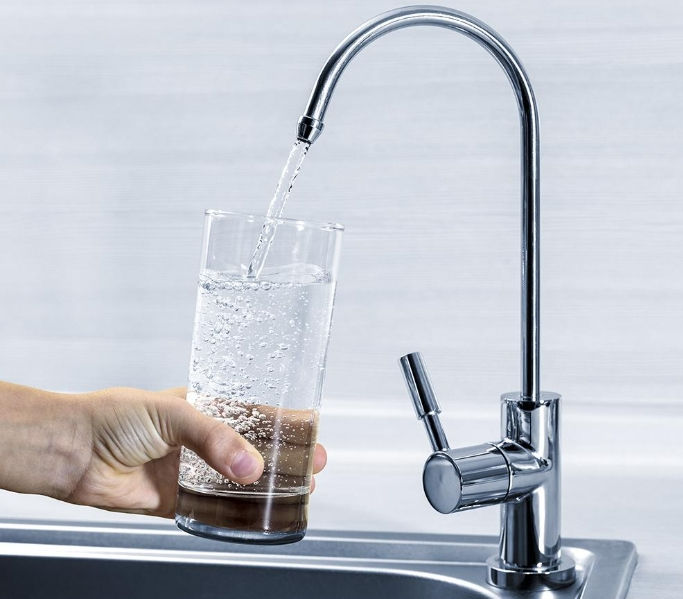
Under-sink drinking water filtration
Whole-home sediment filtration
Carbon filtration
Multi-stage treatment
UV disinfection for suitable private-water applications
Replacement of failed filter equipment
Households with babies, older family members or people who may be more vulnerable to illness should take official water-quality warnings particularly seriously.
For New Home Buyers
A filter system already installed at a property should not automatically be assumed to be working correctly.
New owners should check:
The age of the system
The last cartridge replacement date
The source of the property’s water
Whether replacement filters are readily available
Whether the system has been bypassed
Signs of leaks, corrosion or damaged housings
Whether the treatment system suits the current water source
An old filter with no maintenance record may require servicing or replacement.
For Rural and Regional Residents
Rural properties may rely on tanks, bores and pumps. These systems can require a more tailored approach because water characteristics can differ significantly between properties.
A suitable setup may include:
Coarse pre-filtration
Fine sediment filtration
Treatment for specific water-quality issues
Disinfection where required
A maintenance schedule based on actual usage and source conditions
Testing is particularly useful before selecting treatment for a private bore. A system should be designed around the water that is actually present rather than assumptions based only on appearance.
For Apartment Owners
Apartment residents may have less control over the building’s main water infrastructure. Before installing a whole-property system, check strata or building requirements. A point-of-use system may be more practical for drinking and cooking water. If the problem affects multiple apartments, the issue may need to be investigated at building level rather than treated separately inside one unit.
What to Do Before the Installer Arrives
A few practical steps can reduce damage and help the technician identify the problem faster.
If the Filter Is Leaking
Turn off the relevant water supply if it is safe to do so.
Switch off electrical equipment near the leak.
Do not open a pressurised filter housing unless you know the correct procedure.
Take clear photos of the failed unit and connections.
If the Water Suddenly Looks or Smells Different
Do not assume a standard filter cartridge will solve the problem.
Check for official local water advice.
Note whether the issue affects hot and cold taps.
Ask nearby properties whether they have noticed the same change.
Keep details of your water source and existing treatment equipment ready.
If a Private Tank or Bore May Be Contaminated
Avoid relying on taste, smell or appearance alone to judge safety. Some contaminants cannot be detected by the senses.
If microbiological contamination is a concern, standard sediment or carbon filtration is not a substitute for appropriate disinfection. WA Health specifically notes that activated carbon filters do not remove bacteria.
If an Official Water Advisory Is Issued
Follow the official instructions exactly.
A boil-water advisory generally addresses microbial risk and requires water to be boiled according to the authority’s directions. A do-not-drink advisory is different and may require an alternative water supply because boiling does not remove every type of contaminant.

Why Professional Installation Matters in an Emergency
An emergency often creates pressure to buy the first available filter. That can lead to the wrong system being installed.
Professional Water Filter Installation can help with:
Correct sizing
Suitable filter selection
Safe plumbing connections
Leak prevention
Pressure management
Proper system flushing
Maintenance planning
Integration with tanks, pumps or existing treatment equipment
The main goal is not simply to “add a filter.” It is to create a treatment setup that suits the water source and the household’s needs. For Derby and Fitzroy Crossing properties, access to replacement cartridges, UV lamps and other consumables should also be considered. A sophisticated system is less useful if essential replacement parts are difficult to obtain during a breakdown.
A practical water filtration system should therefore balance treatment performance, reliability, maintenance and local serviceability.
FAQs:
1. How quickly can an emergency water filter be installed?
Installation time depends on the fault, water source, system type and availability of suitable parts. A simple replacement may be completed quickly, while a bore, tank or multi-stage system can require additional assessment. For suspected contamination, testing or disinfection may be needed before the water is considered suitable for drinking.
2. What type of water filter is best for bore water in Western Australia?
There is no single best filter for every bore. Bore water can contain different levels of sediment, minerals, hardness and other substances. Water testing should guide system selection. Depending on the results, treatment may include sediment filtration, specialised media, reverse osmosis or another process designed for the property’s specific water quality.
3. Can a water filter make contaminated water safe to drink?
Not every filter can make contaminated water safe. Sediment filters remove particles, while activated carbon mainly addresses certain tastes and odours and does not remove bacteria. Microbial or chemical contamination may require disinfection, reverse osmosis or other treatment. Follow official advice during any drinking-water warning.
4. How do I know if my water filter needs urgent replacement?
Common warning signs include a major pressure drop, leaking housing, damaged seals, unusual taste or odour, visible sediment after filtration or an overdue cartridge with an unknown service history. If water quality changes suddenly, do not assume cartridge replacement alone will fix the issue; the source should also be investigated.
5. Do I need a whole-house water filtration system or an under-sink filter?
It depends on the problem. An under-sink filter treats water at one drinking point, while a whole-house system treats water entering the property. Whole-home filtration may suit widespread sediment issues, while point-of-use treatment can suit drinking and cooking needs. Water source, quality, flow rate and budget should guide the decision.
Final Thoughts
An Emergency Water Filter Installation in Derby or Fitzroy Crossing should start with one clear question: What is actually wrong with the water or the existing filtration system?
Sediment, taste, hardness, equipment failure and microbial contamination are different problems. They should not be treated with the same filter.
For families, homeowners, new property buyers, apartment residents and rural households, the safest approach is to identify the water source, assess the problem, select the correct treatment method and maintain the system properly.
A well-planned water filtration system can improve water clarity, taste and household convenience, but no domestic filter should be treated as a substitute for official public-health advice during a drinking-water emergency. For properties using private tanks or bores, appropriate inspection, water testing and treatment can be just as important as the Water Filter Installation itself.


